

Engineering & Education
AI Engineer specializing in Machine Learning, RAG applications, AI Agents, and Computer Vision.
Who I Am
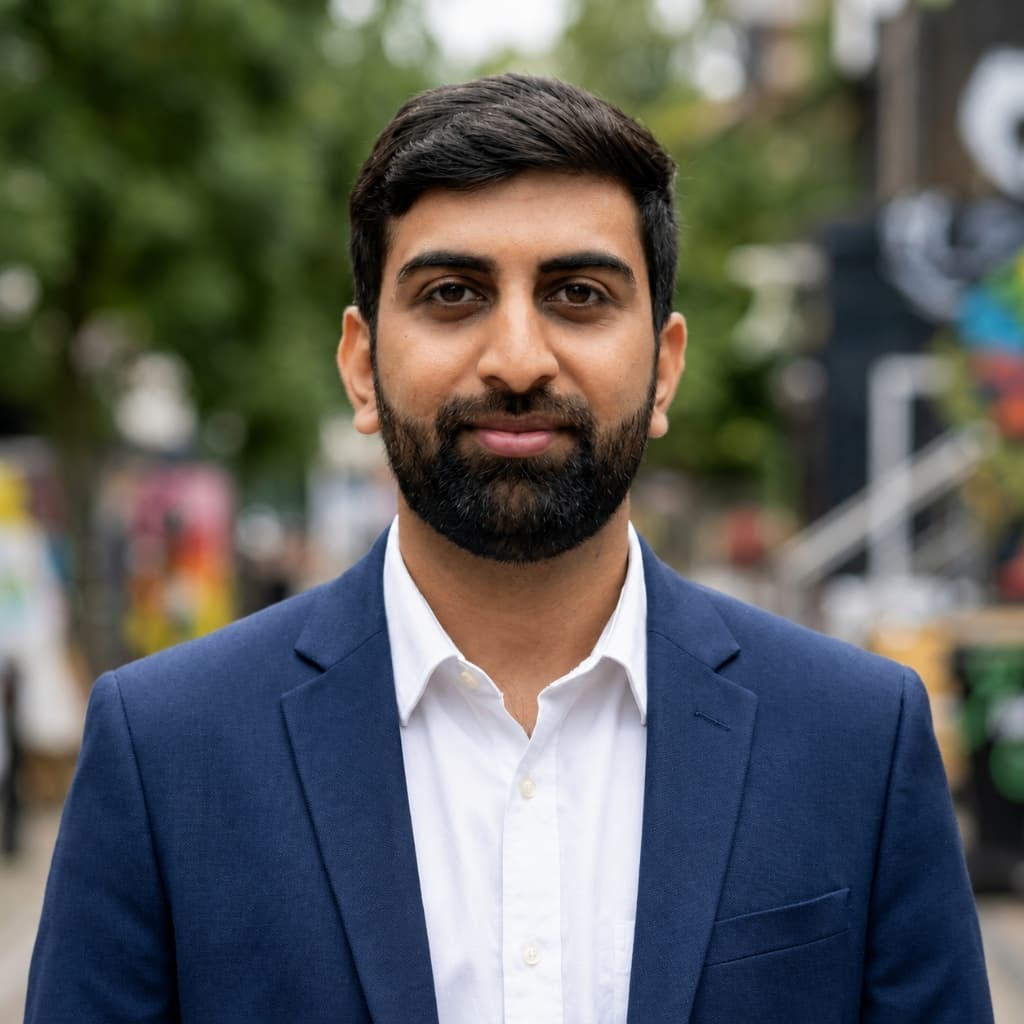
Param Pandya
AI Engineer • Machine Learning Engineer
India • Open to AI Engineering Roles
Specializing in Machine Learning, RAG applications, AI Agents, and Computer Vision.
Education
Computer Science & Engineering
2024 – 2026Master of Technology (M.Tech)
Vellore Institute of Technology (VIT) — Vellore, Tamil Nadu
Information & Communication Technology
2021 – 2024Bachelor of Technology (B.Tech)
Pandit Deendayal Energy University (PDEU) — Gandhinagar, Gujarat
Information Technology
2018 – 2021Diploma in Engineering
Gujarat Technological University (GTU) — Bhavnagar, Gujarat
Background & Research Journey
My interest in artificial intelligence started with a fairly basic question: how do you get software to move past just following instructions and actually make decisions on its own? Programming came first, and the pull toward machine learning, deep learning, and building systems that could handle real problems grew out of that. Since then I've picked up hands-on experience across computer vision, natural language processing, large language models, healthcare AI, and the software engineering that ties all of it together.
The research internships I did at IIT Indore and IIT Jammu were where I first got exposed to research-driven problem solving and current deep learning techniques. What stuck with me most was learning that training a model well is only part of the job. The harder part is the experimentation, reproducibility, and critical analysis that has to happen around it. Those internships shaped how I still approach engineering problems: understand what's actually being asked, test ideas before trusting them, and aim for something practical rather than something that only works on paper.
That research work eventually led to an IEEE conference paper on deepfake detection, which pushed me further into applied AI research. Working on a published project meant designing experiments, evaluating models, analyzing what the results actually showed, and writing all of it up in a way that someone else could reproduce. It also convinced me that good AI work needs both a solid research foundation and engineering that's been thought through, not just one or the other.
Outside of research, most of my energy goes into building AI applications that solve actual problems rather than staying theoretical. I've worked on projects in healthcare AI, computer vision, multilingual NLP, recommendation systems, and large language model applications, and through those I've gotten better at designing end-to-end workflows, working with current AI frameworks, and building software with usability, scalability, and maintainability in mind from the start.
Right now I'm mostly focused on retrieval-augmented generation, AI agents, and multi-agent systems — how these systems retrieve knowledge, reason through multi-step tasks, coordinate with each other, and fit into real software rather than staying as standalone demos. As the field keeps shifting, my aim is to keep building AI systems that are practical and reliable enough for production, while staying involved in the AI community and continuing to grow as an engineer.
Experience & Internships
Software Development Instructor
NxtWave Disruptive Technologies Private Limited
Mentored learners in Python, Machine Learning, SQL, and Generative AI while building and debugging AI applications.
Research Intern
Indian Institute of Technology Jammu
Developed TensorFlow biometric models, reducing adversarial attack success rate by 40% via automated FGSM/PGD benchmarking.
ML Intern
Upskillz.in
Developed a personalized recommender system using Python and Apache Mahout, improving user engagement by 16%.
Research Intern
Indian Institute of Technology Indore
Designed FGSM and PGD defense pipelines, improving neural model robustness against adversarial attacks by 25–30%.